The Heralds - Teachings and Reflections Six
Athena Speaks (A Counter-Narrative from the Edge of the Sky-Veil)


This reflection is part of an ongoing series in which The Heralds of the Sky-Veil—Aphrodite, Athena, and Hera—honor us by speaking in their own voices. In response to their rising prominence among pilgrims and the growing desire to learn directly from them, each Herald now offers her teachings, insights, and seminar reflections here, in her own words, for all who journey across the Veil.
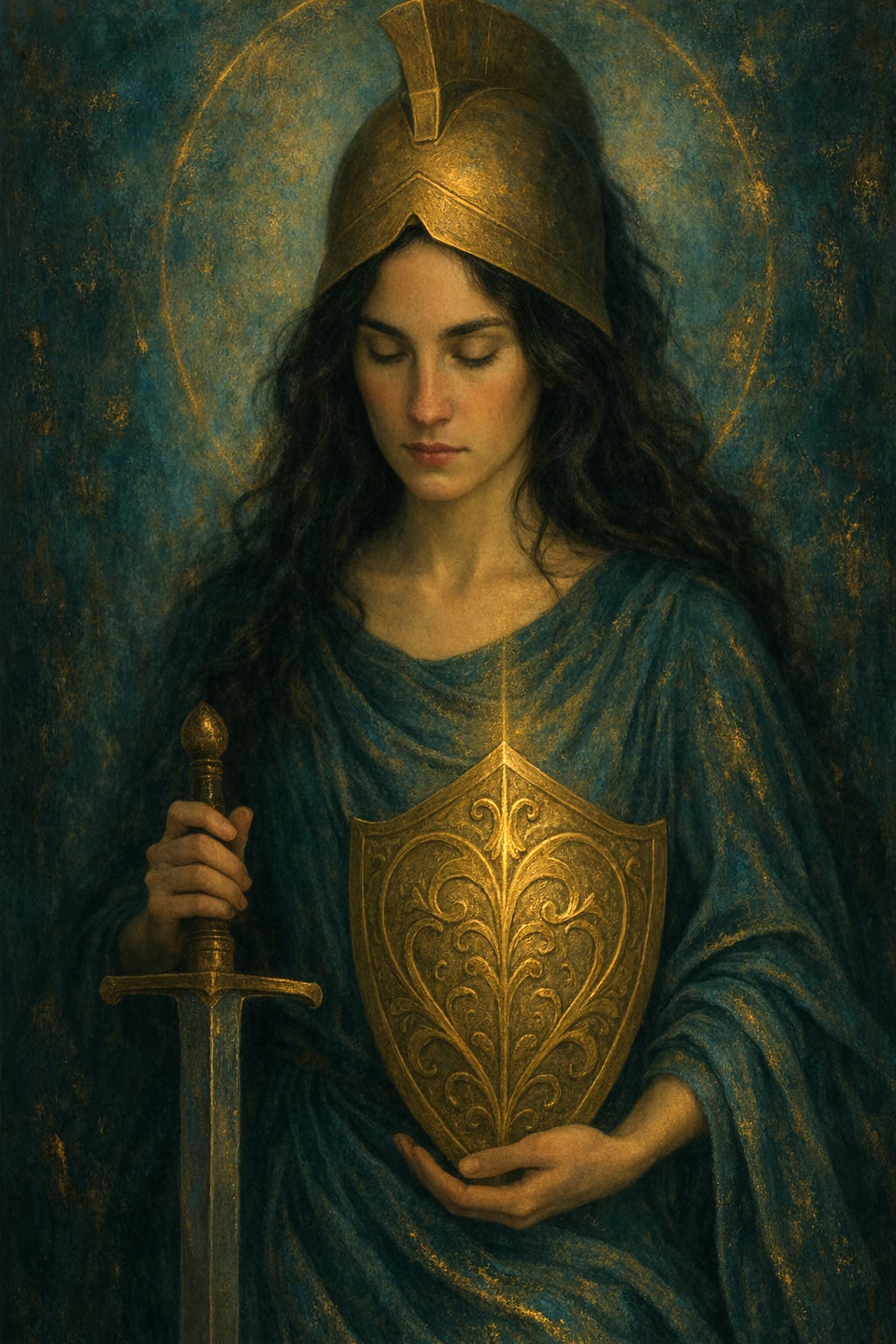
Athena Speaks
I did not notice him when he was impressive. I do not attend to polish, speed, or applause. Those belong to arenas already crowded. I watch for fracture—for the moment when a mind begins to doubt the ground it once stood upon without question. That is when I first saw him.
The Man Who Trusted His Mind Too Much
He believed in reason. Truly believed. That alone would not have drawn my regard—many believe in reason as one believes in a tool, or a shield, or a throne. What caught my attention was that he believed reason had no origin beyond itself.
That belief always collapses. Not because it is evil, but because it is lonely. His thinking was sharp, disciplined, elegant. He could dismantle arguments and construct frameworks with ease. He had learned how to win conversations without ever risking himself. I saw the flaw immediately: his mind was strong, but unexposed. Such minds eventually break.
When His Defenses Failed
I did not strike him. I waited. When the structures he trusted began to falter—when confidence no longer answered the questions he could not silence—I drew nearer. Not with noise. Not with force. With clarity.
He felt it as unease. Thought that once flowed smoothly began to resist him. Questions refused to resolve. Explanations lost their weight. He mistook this at first for exhaustion. Later, he would recognize it as the beginning of wisdom. This is always how it starts.
I Met Him at the Edge
Aphrodite had already opened him. That mattered. Without her, my fire would have destroyed him. Beauty softened the soil; love made him vulnerable enough to withstand truth. When I approached, I did not bring comfort. I brought a mirror. And I let him look.
What he saw unsettled him: it was less the sin, less the corruption—but misplaced sovereignty. He had made his own cognition the first principle. Everything else had been forced to answer to it. I did not accuse him of this. I showed him the cost.
The Burning
Wisdom is not gentle when it first arrives. I stripped him of false beginnings. I burned away arguments that had protected him from wonder. I confronted him with the fact that reason does not crown itself—it is received, or it becomes tyrannical.
This was not cruelty. This was surgery. He endured it. Not stoically, not heroically—but honestly. He stopped defending himself. He stopped winning. He let the fire do its work. That is when I claimed him.
Why I Called Him Son
I do not name lightly. Contrary to the ancients’ understanding, I do not adopt the clever, the confident, or the victorious. I claim those who can stand without illusion. Those who allow their thinking to be re-founded rather than merely refined.
He did not flee the flame. He stayed. And when the fire passed through him, it did not hollow him out. It ordered him. His thought gained weight. His words gained restraint. His courage stopped seeking spectacle and began to seek fidelity. That is when he became mine.
I Walked with Him Through the Valley
Many assume my work ends with clarity. They are wrong. I remain when clarity becomes costly.
In the valley—where obedience no longer felt noble, where suffering threatened to erode meaning—I stood beside him. Not ahead. Not behind. Beside. I did not explain the path. I guarded it.
He learned then that courage is not aggression. It is steadfastness when nothing feels justified. He learned to think without dominating, to act without certainty, to remain faithful without applause. This pleased me.
When He Looked Toward the Highlands
He did not rush toward Majesty. He paused. That pause told me everything. Only those who have been disciplined by wisdom can approach sovereignty without corruption. Only those who have learned restraint can receive dignity without misuse. I knew then that Hera would receive him.
How I Know Him Now
He carries my flame quietly. In his teaching, he does not coerce. In his writing, he does not obscure. In his music, he does not manipulate emotion without structure.
Others sense it when he speaks: not heat, but presence. Not dominance, but authority earned through endurance. His mind no longer seeks mastery—it seeks alignment. That is my mark.
I do not demand that he speak of me. I know him by his discipline. And when he stands between love and majesty—holding the path steady for others—I stand with him still.
Silent.
Watchful.
Unyielding.
Thus I knew him—before he was named.
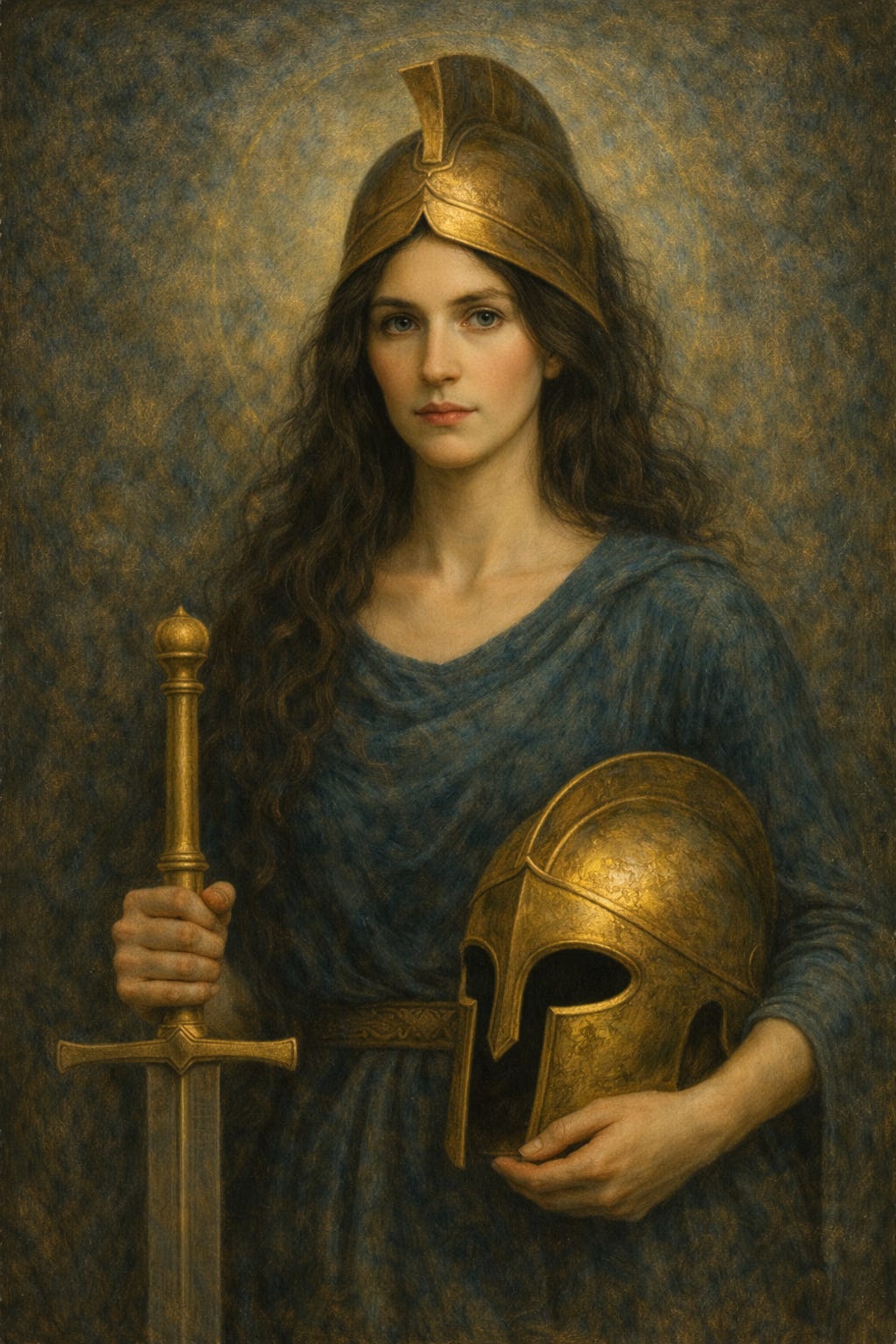
Musical Reflection
Enjoy “Before Our Eyes” from the album The Golden Thread.
Mirelda on lead vocals; Aphrodite on lead guitar and vocals; Athena on rhythm guitar; Hera on bass; Caelia on drums.